More Than Music: How Playing Together at Juniata Shapes the Leaders of Tomorrow
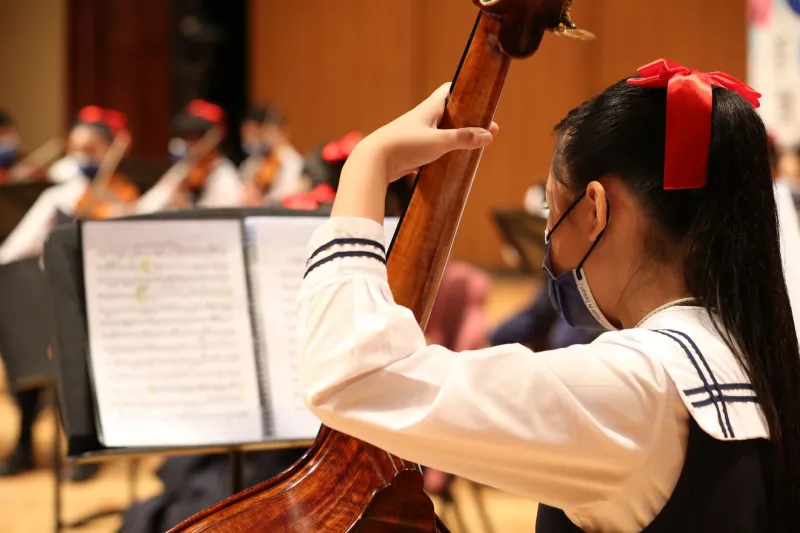
Ask most people what they expect to get out of a college music program, and they'll give you the obvious answers. Better technique. A deeper understanding of theory. Maybe a senior recital they can brag about at family dinners. What they rarely mention — at least not until years later — is that the rehearsal room quietly became one of the most transformative leadership classrooms they ever walked into.
At Juniata College, that transformation is playing out across generations of alumni. And the more you talk to them, the harder it is to dismiss it as coincidence.
What the Rehearsal Room Actually Teaches
There's a particular kind of pressure that comes with ensemble performance. You can't coast. You can't fake it. When you're sitting in a string section or locked into a wind ensemble, every mistake is audible — not just to the conductor, but to the twelve people standing next to you. That level of accountability, it turns out, is a pretty solid training ground for professional life.
Kayla Merritt, a 2015 Juniata graduate who now works as a project manager for a healthcare nonprofit in Philadelphia, played clarinet in the Juniata College Wind Ensemble for all four years of her undergraduate experience. She didn't major in music — her degree was in public health — but she showed up to every rehearsal like it mattered, because it did.
"There's this moment in ensemble playing where you realize you're not just responsible for your own part," she says. "You're responsible for how your part fits into everyone else's. If I come in half a beat late, the whole thing falls apart. That's not so different from a grant deadline or a team project where one person dropping the ball affects everyone."
She credits her time in the ensemble with teaching her how to give and receive critical feedback without making it personal — a skill she now uses daily when managing cross-departmental teams.
Conflict Resolution, Conductor-Style
If you've ever sat through a tense orchestral rehearsal, you know they're not always harmonious in the interpersonal sense. Disagreements over tempo, interpretation, and dynamics happen constantly. How a group works through those creative tensions — without derailing the whole session — is a skill that translates almost directly to workplace conflict resolution.
Marcos Delgado, who graduated from Juniata in 2011 and now runs a community development organization in central Pennsylvania, played bass guitar in several of Juniata's jazz ensembles. He remembers heated debates about arrangement choices that could've gone sideways fast.
"We had this one rehearsal where two of the horn players completely disagreed about how a transition should feel," he recalls. "Our director didn't just pick a side. He made both of them articulate what they were hearing, why it mattered, and then asked the rest of us to weigh in. By the end, we'd built something better than either of their original ideas."
Delgado says he's used that exact framework — surface the disagreement, encourage articulation, invite broader input — in community organizing meetings more times than he can count. "People are surprised when I tell them I learned that from jazz band," he laughs. "But I really did."
The Listening Skill Nobody Talks About
Leadership literature is full of advice about communication. Speak clearly. Be direct. Know your audience. But genuine listening — the kind where you're actually absorbing what someone else is contributing before formulating your response — is a much rarer and harder-won skill. Musicians, especially ensemble musicians, are trained in it from day one.
In a chamber group or a jazz combo, you have to track what every other player is doing in real time. You adjust your dynamics when someone else swells. You leave space when a soloist is building. You follow the energy of the room. It's an active, responsive, almost athletic form of attention.
Dr. Patricia Osei, a family physician in Pittsburgh who sang in Juniata's Chamber Choir from 2004 to 2008, says this carried directly into her bedside manner. "Medicine is about listening before diagnosing," she explains. "You can't jump to a conclusion before you've heard the full picture. In choir, I learned to hold back, to stay present, to wait for the right moment to contribute. I do that with patients every single day."
Juniata's Particular Approach
What makes Juniata's music program especially well-suited to developing these skills isn't just the quality of the ensembles — it's the size of the institution. With a student body of around 1,400, Juniata doesn't have the luxury of anonymity. Music students aren't lost in a sea of performance majors. They're known. They're mentored. They're held to a standard that's both personal and communal.
Faculty members here have the bandwidth to invest in students as whole people, not just as instrumentalists or vocalists. That means conversations about what music is teaching you, not just how you're playing it. It means being encouraged to draw connections between rehearsal dynamics and the rest of your education.
That integrative approach fits squarely into Juniata's broader educational philosophy, which has long emphasized interdisciplinary thinking and community engagement. Music doesn't exist in a silo here — it's woven into the fabric of how students learn to relate to each other and to the world outside campus.
The Ripple Effect in Real Communities
Maybe the most compelling part of this story isn't what individual alumni are doing in their careers — it's what they're doing in their communities. Several Juniata music alumni have gone on to found or lead local arts programs, community choirs, and music education initiatives in underserved areas across Pennsylvania and beyond.
There's something poetic about that. The skills absorbed in a college ensemble — listening, collaborating, holding your part while supporting others — become the building blocks of community itself. You learn to make music together, and then you go out and apply that same logic to the harder, messier work of building something meaningful with other people.
Kayla Merritt put it simply: "Music taught me that the best outcomes come from everyone contributing their best, staying in tune with each other, and trusting the process. That's not just a music lesson. That's a life lesson."
At Juniata, it seems, the two have always been one and the same.