Second Act: The Quiet Revolution of Adults Falling Back in Love with Music
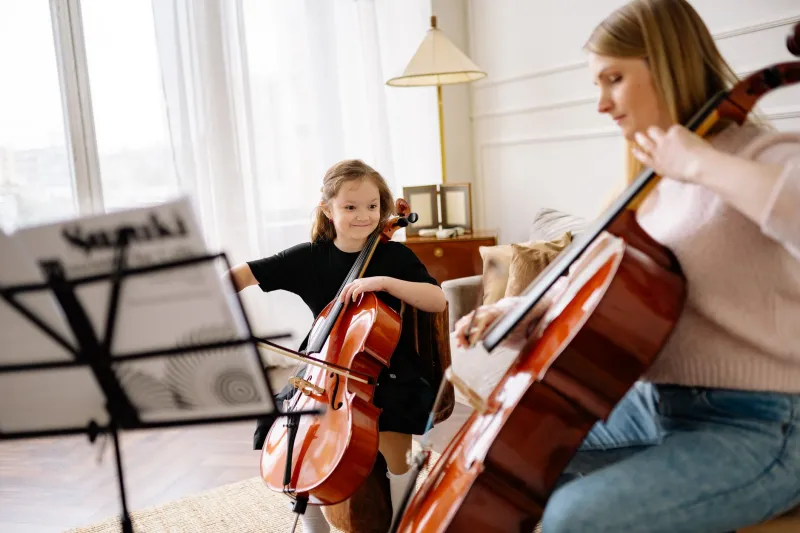
There's a cello sitting in Karen Whitfield's spare bedroom. For eleven years, it lived in its case, untouched, gathering a thin layer of dust near the window. Karen, a 1998 Juniata College graduate who went on to become a hospital administrator in Altoona, always meant to get back to it. Life, as it tends to do, had other plans.
Then the pandemic happened. Then the kids left for college. Then one Sunday morning, she just opened the case.
"I cried a little," she admits, laughing. "It smelled exactly like I remembered it. I tuned it up, pulled the bow across the strings, and I was back in Juniata's rehearsal room in 1996. It was like no time had passed at all."
Karen isn't alone. Music educators, instrument retailers, and community ensembles across the country are noticing a genuine uptick in adults returning to instruments they set aside years — sometimes decades — ago. It's a trend that's showing up right here in central Pennsylvania, and it's reshaping how we think about music education, community, and what it means to grow creatively at any age.
Why People Walk Away in the First Place
Before we talk about the comeback, it helps to understand the departure. For most adult returners, the story is remarkably similar: music was a significant part of their youth, whether through school band, private lessons, or just playing around in someone's garage. Then came college, careers, relationships, kids, and mortgages. Music slipped from a daily practice into a fond memory.
"There's this cultural message that music is something you do when you're young, or something you do professionally," says Marcus Delray, a music instructor who runs community workshops out of Huntingdon. "If you're not performing on a stage or teaching in a classroom, people feel like they don't have a right to take it seriously. That's completely wrong, but it's a hard belief to shake."
Shame is a bigger factor than most people expect. Adults who were once competent players often feel embarrassed by how much they've lost. The muscle memory fades. The calluses disappear. What once felt effortless now feels frustratingly clunky. For many, that gap between who they were and who they are now is enough to keep the instrument in its case.
What's Pulling People Back
So what's changed? A few things, actually.
The pandemic gave a lot of people an unexpected window of time and a pressing need for something meaningful to do with it. Mental health conversations have normalized the idea of creative outlets as genuine self-care rather than indulgence. And social media — for all its complications — has built thriving communities of adult learners who share progress, cheer each other on, and make the whole thing feel a lot less lonely.
Joe Tambellini, a Juniata alum from the class of 2003 who now works as a software engineer in State College, credits a YouTube rabbit hole for his return to the trumpet.
"I stumbled onto this channel run by a guy who was just documenting his own comeback after twenty years away," Joe says. "He wasn't great at first. He was honest about it. And I thought, if he can do it, I can do it. I ordered a new mouthpiece the same night."
That low-stakes, no-pressure entry point matters enormously. Adults need permission — sometimes from a stranger on the internet — to be a beginner again.
The Real Barriers (and How to Get Around Them)
Let's be practical for a second, because the romantic version of the comeback story skips over some real obstacles.
Time is the obvious one. Most returning musicians aren't going to find two hours a day to practice. And that's okay. Research consistently shows that even fifteen to twenty minutes of focused, intentional practice produces genuine progress. The key word is focused. Noodling while watching TV doesn't count. Sitting down with a specific goal — even something as small as "I want to play this one scale cleanly three times" — makes a real difference.
Physical changes catch a lot of people off guard. Fingers that used to fly across a keyboard may feel stiff and uncooperative. Wind players sometimes discover their lung capacity isn't what it was. String players lose their calluses and feel every note. This is normal, and it passes faster than most people expect. The body remembers more than the conscious mind gives it credit for.
Finding the right instruction is worth the investment. Adult learners have different needs than kids. A good teacher — and there are excellent ones in the Huntingdon and surrounding areas — will meet you where you are, not where you think you should be. Many local instructors now offer adult-specific lessons, and Juniata's music department has been known to connect community members with student teachers looking for experience.
Community might be the most underrated factor. Joining an ensemble — a community band, a casual chamber group, an informal jam session — creates accountability and makes the whole thing more fun. The Blair County community music scene, for instance, has several adult ensembles specifically designed for returning players at various levels.
What You Get Back
Here's the part that surprises people most: returning to music as an adult is, in many ways, better than playing as a kid.
The pressure is gone. No one is grading you. There's no audition for first chair. You play because you want to, because it feeds something in you, because it makes a Tuesday evening feel like something more than just another Tuesday evening.
Karen Whitfield, the cellist from Altoona, has been playing again for three years now. She takes a weekly lesson, practices on weekday mornings before work, and recently joined a small string quartet that meets every other Sunday afternoon.
"I'm not as technically clean as I was in college," she says. "But I appreciate it so much more. When I was young, I was always worried about the next performance, the next competition. Now I just love the sound of it. I love how it feels. I love that it's mine."
That sense of ownership — of music as something personal and self-directed rather than performance-driven — is something adult musicians describe over and over again. It's not about impressing anyone. It's about showing up for yourself.
A Note to Anyone on the Fence
If you're reading this and thinking about that guitar in the basement or that keyboard under the bed, consider this your nudge. You don't need to be good. You don't need to be consistent right away. You don't need a plan beyond opening the case.
The music you made before is still in you somewhere. It's just been waiting for you to come back to it.
And if you're looking for a place to start, the greater Juniata region has more resources than you might think — from community music programs to informal groups to instructors who genuinely love working with adult learners. Reach out, show up, and see what happens.
Your second act might be the best one yet.