Keeping the Lights On: Inside the Small Venues Sustaining Live Music in Central Pennsylvania
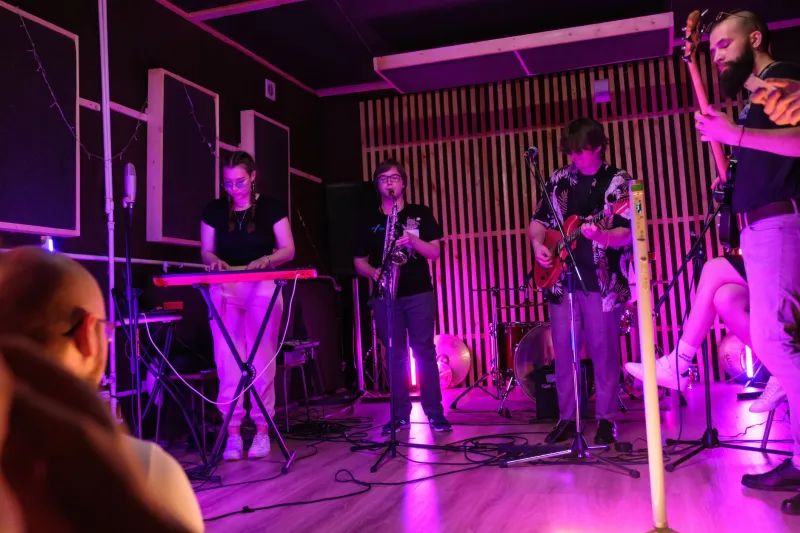
On a Thursday night in late October, a bar called The Rusty Rail in Mifflintown is about as full as it gets. Maybe sixty people, pressed in close around small tables, nursing drinks and watching a three-piece roots band set up on a stage that's technically just a raised platform in the corner. The sound system is decent but not spectacular. The lighting rig consists of four PAR cans and some string lights someone hung from the ceiling a few years back and never took down.
And yet, there's something electric in the room. Something that no streaming playlist, no matter how carefully curated, can replicate.
This is live music in small-town America. It's not glamorous. It's not scalable. And according to the people who make it happen night after night, it's absolutely essential.
The People Holding It Together
Run a quick mental map of central Pennsylvania and you'll find that live music venues are scattered across the region in ways that might surprise you. They're not just in the bigger towns. They're in converted storefronts, repurposed barns, back rooms of restaurants, and community halls that have been hosting local performers for decades.
Behind every one of those spaces is a person — usually one person, sometimes two — who is simultaneously a booking agent, a sound engineer, a janitor, a marketer, and a therapist for anxious performers.
Take Donna Ferraro, who has been running a listening room out of a renovated Victorian building in Lewistown for going on eight years. She books roughly forty shows a year, handles all her own social media, builds every set of risers by hand, and still works a part-time day job to cover the slow months.
"People think running a venue is glamorous because you're around music all the time," she says, laughing. "It's not. Last Saturday I was unclogging a toilet forty-five minutes before showtime. That's the job."
Donna's space holds about ninety people at capacity. She rarely sells out, but she's rarely empty either. She's found her groove booking regional singer-songwriters, occasional touring acts who are willing to work the smaller markets, and themed nights that bring in audiences who might not identify as "music people" but show up anyway for the experience.
The Post-Pandemic Reality
If you want to understand the current state of small venues, you have to reckon honestly with what 2020 and 2021 did to them. The closures, the lost revenue, the broken momentum with audiences who got comfortable staying home — the damage was real and, for some venues, permanent.
Several spaces in the central Pennsylvania region didn't make it through. Others survived through a combination of government relief funds, community fundraising, and sheer stubbornness.
Marcus Webb, who books and promotes shows across a handful of venues in the Juniata Valley area, says the audience relationship fundamentally changed.
"Before COVID, you could put up a Facebook event and expect a certain baseline of walk-ins," he explains. "Now people are much more intentional. They'll come out, but they want to know exactly what they're coming out for. The impulse crowd basically disappeared. You have to work harder to make a compelling case for why tonight is worth leaving the couch."
That shift has pushed venues toward more creative programming. Donna started hosting what she calls "Story Nights," where performers spend as much time talking about the songs as playing them. The format creates a more intimate, dinner-party feel that's proven remarkably popular with audiences in their thirties and forties who grew up going to concerts but lost the habit.
Other venues leaned into food and drink experiences, partnering with local breweries or bringing in food trucks to give audiences a fuller evening rather than just a show. The music becomes the anchor of an event rather than the entire event itself.
What Artists Actually Need From a Venue
From the performer's side, the calculus of playing small regional venues is its own complicated equation. The pay is rarely life-changing. The drives can be long. But the right small venue — one with a sound system that works, a crowd that actually listens, and an owner who treats musicians like human beings — can be worth more than a higher-paying gig at a place that treats artists like background noise.
Lena Castillo, a Huntingdon-based singer-songwriter who has been playing the central Pennsylvania circuit for six years, is specific about what she values.
"Sound matters more than size," she says flatly. "I'd rather play for forty people in a room with good acoustics and a decent monitor mix than two hundred people in a room where I can't hear myself. The small venues that invest in their sound systems — those are the ones I go back to."
Hospitality matters too. Green rooms, even basic ones. A meal or at least a tab. A promoter who promotes. Lena has played enough shows where she did more marketing work than the venue itself to know the difference.
"When a venue owner actually shares the event, sends it to their email list, puts up a poster — you feel it in the room. The audience knows who you are before you even play the first note. That's a completely different experience."
The Role of Juniata and College Communities
It would be incomplete to talk about the regional live music ecosystem without acknowledging the role that Juniata College plays — both directly and indirectly. Student audiences, however inconsistent, provide a real bump for venues within range of Huntingdon. Alumni who've settled in the area carry their love of live music with them into the community.
Several venue owners mentioned that connecting with Juniata's music department — even informally — has opened doors. Student ensembles looking for performance space. Faculty who bring their own networks. The college's events calendar occasionally sending people out into the town looking for something to do.
"There's a real opportunity there that nobody's fully figured out yet," Marcus Webb says. "The college and the local venues should be in conversation more than they are. That relationship could benefit everybody."
Why It Keeps Going
So why do people like Donna Ferraro keep doing it? Why does Marcus Webb keep booking shows in venues that hold less than a hundred people? Why do artists like Lena Castillo keep driving two hours for a Thursday night show in a town most people have never heard of?
The answers are surprisingly consistent across everyone we talked to.
Because live music does something that nothing else does. Because the moment when a room full of strangers all feel the same thing at the same time is genuinely irreplaceable. Because small towns deserve culture, not just access to culture that happens somewhere else.
And because someone has to do it.
"If we don't," Donna says simply, "there's just nothing. No music, no gathering place, no reason for people to get out and connect with each other. I'm not saving the world. But I'm doing something real."
On that Thursday night in Mifflintown, the roots band plays its last song to a room that doesn't want to let them go. The applause is genuine and warm. Two people in the back are already asking when they're coming back.
The lights stay on for another night.